
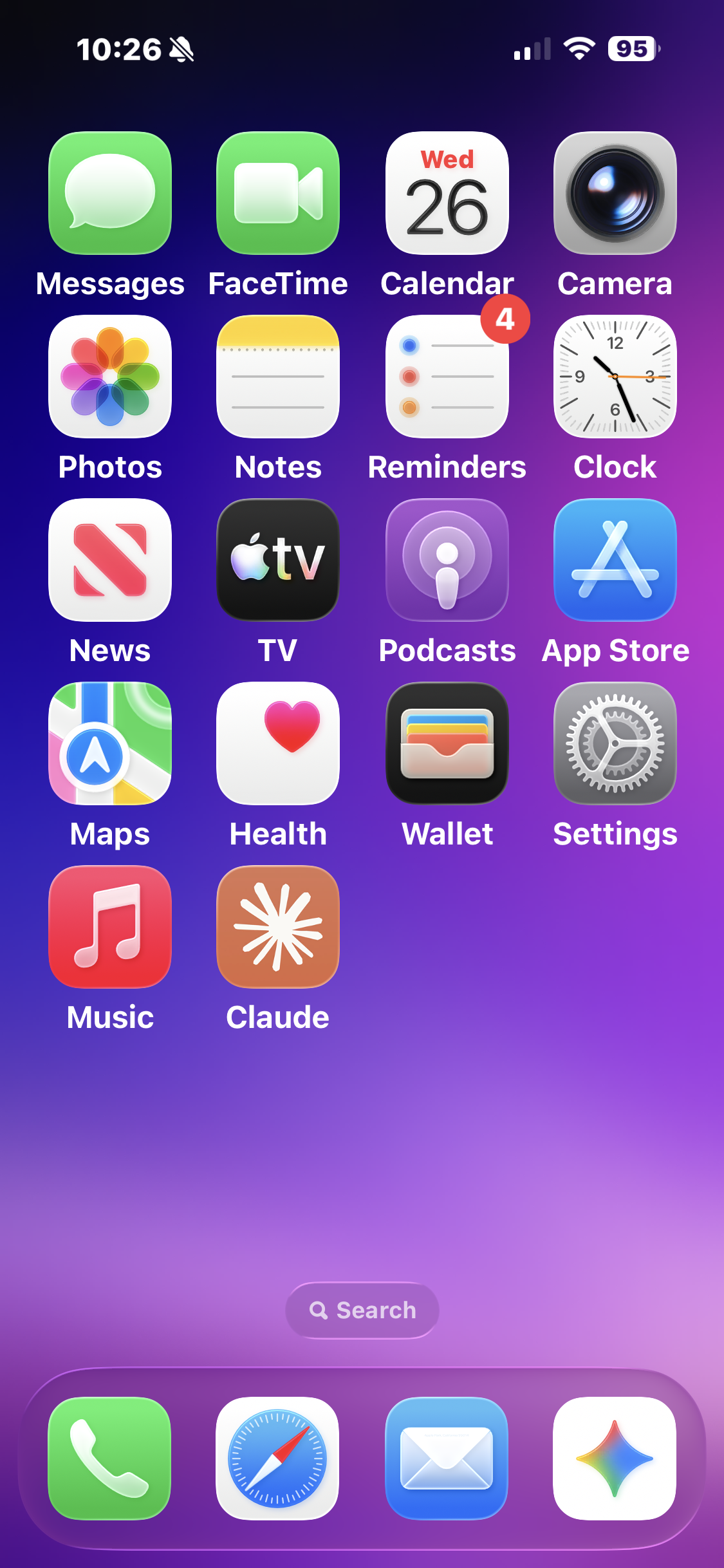

Apple just confirmed something iPhone fans have been asking for since iOS 26's Liquid Glass redesign launched. The company is shifting gears for iOS 27, prioritizing quality and stability over the rapid-fire feature releases that have defined recent updates.
Bloomberg's Mark Gurman broke the news, comparing Apple's iOS 27 strategy to the legendary Mac OS X Snow Leopard update from 2009. That release famously focused on refinement rather than reinvention, cutting bloat and fixing bugs instead of piling on features.
Engineering teams across Apple are now hunting for code to remove, bugs to squash, and performance bottlenecks to smooth out. iOS 27 marks the first time since iOS 12 in 2018 that Apple has taken this approach.
The timing makes sense. iOS 26 brought the biggest design overhaul in years with Liquid Glass, completely reshaping how notifications, widgets, and the Lock Screen behave. Many users experienced overheating, battery drain, keyboard glitches, and app crashes as they adjusted to the new interface.
Rather than adding another layer of complexity, Apple is stepping back to let the platform breathe.
iOS 27 will still introduce new features, but those additions will focus heavily on artificial intelligence rather than visual changes. Apple knows it's behind competitors in the AI race, so the company is pushing resources toward catching up while also cleaning up the foundation.
Two major AI features are already planned. First, an AI health agent that may launch alongside an Apple Health+ subscription service. Second, expanded AI-powered web search designed to challenge Google and Perplexity directly.
These additions will build on the AI-infused Siri update expected in iOS 26.4 this spring. That version reportedly uses a custom Google Gemini model that keeps data processing within Apple's private cloud compute system rather than sending information to Google's servers.
Behind the scenes, Apple is testing an internal chatbot called Veritas that helps shape next-generation Siri capabilities. The chatbot serves as a testbed for new AI features before they reach public releases.
The Snow Leopard comparison runs deeper than just marketing. That 2009 release removed unnecessary features, rewrote core system code, and laid the groundwork for future Mac transitions. iOS 27 appears designed to serve the same role, preparing the platform for new hardware like Apple's first foldable iPhone.
macOS 27 will follow the same quality-first approach. This makes particular sense for the Mac side, as macOS 27 will be the first release to drop Rosetta support entirely, removing all Intel-specific code that has accumulated since the Apple silicon transition began.
What does this mean for daily iPhone use? Faster animations, fewer crashes, better battery life, and more consistent performance under pressure. The changes will feel incremental rather than revolutionary, but that's exactly the point.
Apple fans have complained for years about software quality declining as the company rushes to announce headline features at WWDC. iOS 27 represents a reset, a chance to stabilize the platform before the next wave of innovation.
The first iOS 27 beta will likely arrive shortly after WWDC in June 2026, with public release in September alongside new iPhone hardware. All devices that support iOS 26 should receive iOS 27, similar to how every iOS 11 device got the stability-focused iOS 12 update.
If iOS 27 lives up to the Snow Leopard comparison, it could become one of the most satisfying iPhone updates in years, not because of what it adds but because of what it fixes.
Affiliate disclosure: some links in this article are Amazon Associate links. If you buy through them, Next Level Mac may earn a small commission at no extra cost to you, and we only recommend products that genuinely bring value to your Apple setup.
For anyone planning to ride out their current iPhone through iOS 27, keeping your device running smoothly becomes even more important. A reliable charging setup helps extend the life of your iPhone and ensures it's always ready when updates arrive.
The Anker MagGo 3-in-1 Charging Station offers Qi2 certified 15W wireless charging for iPhone, plus dedicated spots for Apple Watch and AirPods. The design includes official MFW certification for fast Apple Watch charging and adjustable viewing angles that work in portrait or landscape orientation. Everything connects through a single 40W USB-C adapter, eliminating cable clutter on your desk or nightstand.
Where you can purchase the Anker MagGo 3-in-1 Charging Station (Amazon Affiliate Link): https://www.amazon.com/dp/B0DDQ71B9P?tag=nextlevelmac-20&gbOpenExternal=1
If your iPhone spends more time in your pocket or bag than on a charger, a portable power bank makes more sense than a desktop stand. The Anker 633 Magnetic Battery combines a 10,000mAh battery with MagSafe compatibility and a built-in kickstand. The battery pack attaches magnetically to iPhone 12 and newer models, providing wireless charging without blocking the camera or buttons. The foldable stand lets you prop up your iPhone for hands-free video calls or media playback while charging. At full capacity, it can recharge an iPhone 13 Pro up to 1.8 times.
This is where to buy the Anker 633 Magnetic Battery (Amazon Affiliate Link): https://www.amazon.com/dp/B09NRG4GK3?tag=nextlevelmac-20&gbOpenExternal=1
iOS 27's focus on quality over features means your current iPhone will likely feel faster and more stable rather than dramatically different. That makes it the perfect time to invest in accessories that keep your device running well rather than chasing the latest hardware upgrade.
Apple has spent years adding complexity to iOS. iOS 27 represents the company's acknowledgment that sometimes the best update is the one that makes everything work better rather than adding more things to manage.
If the execution matches the promise, iOS 27 could remind longtime Apple users why they fell in love with the platform in the first place. Not because it does more, but because it does what matters exceptionally well.

Related Posts
iPhone 17 Screen Protectors: Why Anti-Reflective Coating Matters
Dec 06, 2025
Master iPhone Automation: The Ultimate NFC Tag Guide (2026)
Dec 05, 2025
Free Up Your iPhone Storage in IOS 26
Dec 05, 2025