
I've been building smart home tech in my own home since the first Amazon Echo dropped back in July 2015. Ten years in, I've learned some valuable lessons, and they'll save you a lot of time and money.
I've tried Amazon's offerings for voice assistants, then Google's, and finally landed on Apple a few years ago. I was initially put off by the cost of the Apple ecosystem of smart home tech, but I've since found that it has been the most reliable and easiest to use and maintain.
Here's a look at the past and present of smart home setups, and what I think are the best paths forward in 2025 and beyond to make this an easy and reliable process for you to build your own smart home.
The Pain of the Past
Now, that is all changing. Two new technologies, Matter and Thread, are finally delivering on the original promise of the smart home. They are making it simple, reliable, and interoperable. If you have been waiting to build your smart home, or are frustrated with the one you have, now is the time to pay attention.
If you have ever tried to build a smart home, you might have felt a familiar frustration. Devices drop off the network. An app for your lights will not talk to the app for your plugs. Your voice assistant suddenly forgets how to turn on a lamp you have used for months. For a long time, the "smart home" has been anything but smart. It has been a complicated, fragmented mess of competing standards, hubs, and walled gardens.
This was especially true for those of us in the Apple ecosystem. While Apple HomeKit has long been lauded for its security and clean interface, its accessory support has often lagged behind. We had to be careful, always looking for the "Works with Apple HomeKit" logo, knowing that a device without it simply would not function in our Home app.
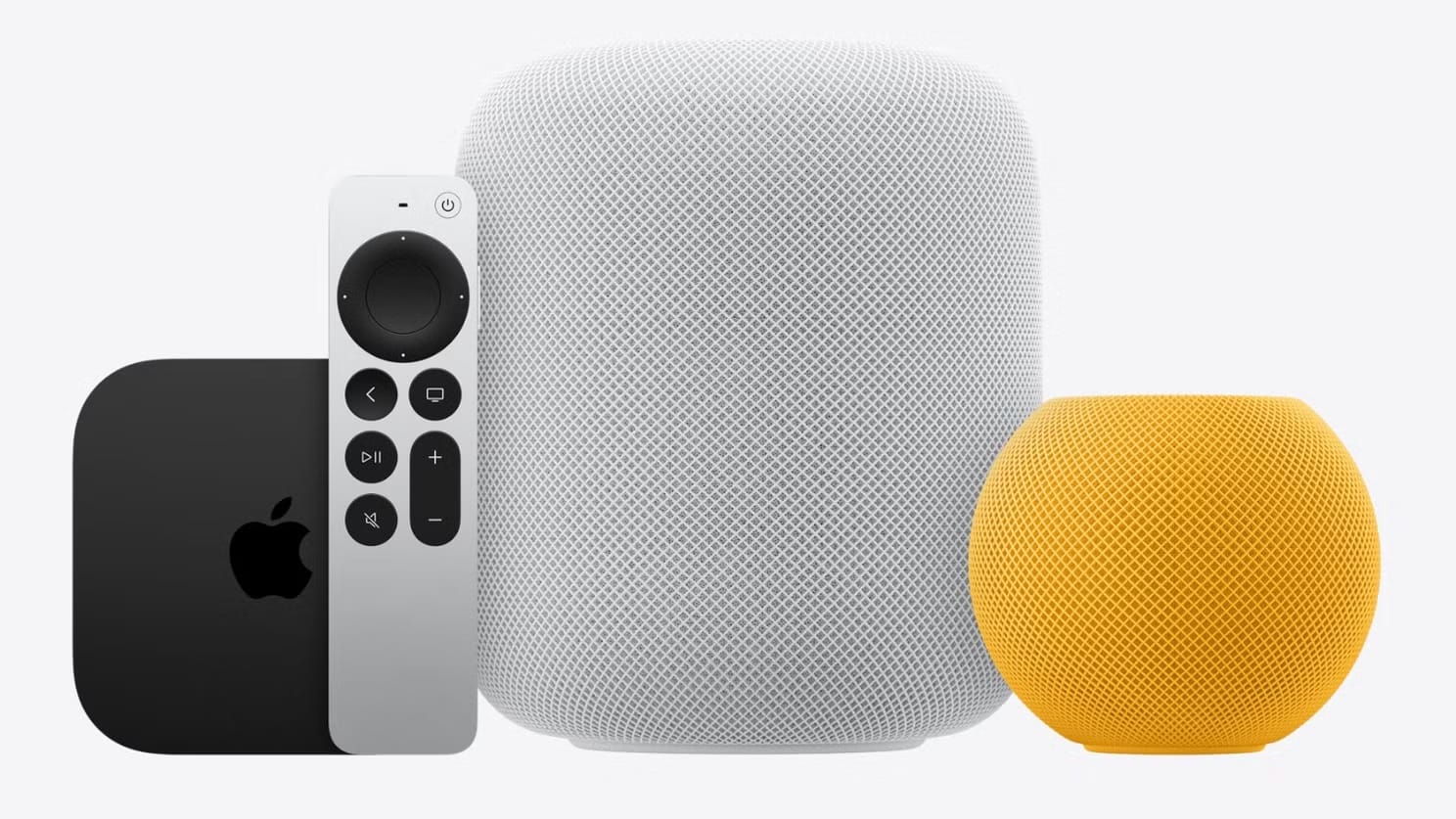
These new standards are not just technical jargon; they represent a fundamental shift in how our devices communicate. And the best part? Your iPhone, iPad, HomePod mini, and Apple TV are already equipped to be the perfect foundation for it.
Demystifying the New Smart Home
Before we look at accessories, let's quickly demystify these two terms. You will see them on all the new product boxes, and understanding what they do is key to building a better smart home.
What is Matter, and Why Does It Matter?
Think of Matter as a universal language. In the past, a smart plug from one company spoke a different language than a smart bulb from another. They could not communicate directly. To make them work together, you needed a "translator," which was usually a clunky, brand-specific hub and a complicated third-party app.
Matter, which was developed by Apple, Google, Amazon, and other major tech companies, solves this. It is a single, open-source standard that all new devices can be built to understand. When you see the Matter logo on a box, it means that device will work with Apple Home, Amazon Alexa, Google Home, and Samsung SmartThings.
For us, this is a huge win. It breaks down the walls. We are no longer locked into one brand. We can buy the best smart plug or the best light strip, regardless of the manufacturer, with confidence that it will show up in the Apple Home app right alongside our other devices.
What is Thread?, and How Does It Stitch Things Together?
If Matter is the language, think of Thread as the new, modern way to deliver the message.
Most of your old smart devices likely used Wi-Fi or Bluetooth. Wi-Fi devices are fast but can be power-hungry and clog up your home network. A router can only handle so many connections before it starts to slow down. Bluetooth is low-power but very slow and has a limited range.
Thread is a new wireless protocol designed specifically for smart home devices. It is incredibly low-power, so devices can run for years on a small battery. More importantly, it creates a mesh network.
Instead of every device connecting directly to your router (like Wi-Fi), Thread devices connect to each other. A Thread-enabled smart plug in your hallway can talk to a Thread-enabled light bulb in your living room, which in turn talks to your HomePod mini. This "mesh" makes the network stronger and more reliable with every new Thread device you add.
It is self-healing, so if one device (or "node") goes offline, the network automatically reroutes the signal. It is also incredibly fast, with responses that feel almost instantaneous. Your HomePod mini and modern Apple TV 4K models act as "Thread Border Routers," the gateway that connects your entire Thread network to your home Wi-Fi and the internet.
The Two Pillars of a Modern Apple Smart Home
You do not need to choose between Matter and Thread. They work together. Matter can run over Thread, and it can also run over Wi-Fi.
Here is the simple takeaway:
Matter over Thread: This is the gold standard. It gives you the universal compatibility of Matter combined with the speed, reliability, and low-power mesh networking of Thread. This is the best choice for new devices like plugs, bulbs, and sensors.
Matter over Wi-Fi: This is also great and very common. It gives you the universal compatibility of Matter but uses your existing Wi-Fi network. This is perfect for devices that need more bandwidth, like a smart camera, or for devices that are already plugged into a wall and do not need to worry about saving power.
The goal is to build a smart home that is responsive, secure, and invisible. It should just work, fading into the background of your life. With Matter and Thread, that is finally possible.
Three Devices to Start Your Matter Smart Home


Building out a new smart home can be expensive. The best approach is to start small and build iteratively. By replacing a few "dumb" devices with smart ones, you can immediately see the benefits of automation, scenes, and voice control.
Here are three excellent, reliable starting points that embrace these new standards and work perfectly with Apple Home.
- The Best Thread Smart Plug: Eve Energy
Eve has been a leader in the Apple HomeKit space for years, and they were one of the first to fully embrace Thread. The Eve Energy smart plug is arguably the best and most reliable smart plug you can get for an Apple-centric home.
Its primary function is simple: it turns any "dumb" appliance into a smart one. Plug your favorite floor lamp, a fan, or your coffee maker into the Eve Energy, and you can now control it from the Home app, with your voice via Siri, or in powerful automations.
What makes the Eve Energy special is its deep integration with Apple Home and its use of Thread. It connects to your HomePod mini or Apple TV via Thread, making its response time instantaneous. When you tap the button in the Home app, the light turns on now, not a second or two later.
Because it is a mains-powered Thread device, it also acts as a "router node" in your Thread mesh network. This means it actively strengthens your smart home. By placing one in a hallway, you are extending the reach and reliability of your Thread network to other devices that might be farther away.
The Eve app also provides a fantastic bonus feature: energy monitoring. You can see exactly how much power your connected appliance is using, allowing you to identify "vampire" devices that draw power even when turned off.
Where you can get the Eve Energy (Matter over Thread) Smart Plug:
https://www.amazon.com/dp/B0BZBGD87V?tag=nextlevelmac-20&gbOpenExternal=1
- The Best Matter (Wi-Fi) Smart Plug: Kasa Smart Plug (KP125M)
While Thread is the future, you may not need it for every device. Sometimes you just need a simple, inexpensive, and reliable smart plug that works with everything. For this, the Kasa Smart Plug KP125M is a fantastic choice.
This plug is fully Matter-certified. Unlike older Kasa models that required a separate Kasa app and account, the KP125M can be added directly to your Apple Home app by scanning the Matter code on its side. The setup is clean and takes less than a minute.
This plug uses Matter over Wi-Fi. This means it connects directly to your home's Wi-Fi network. While it does not have the mesh-networking benefits of Thread, it is still incredibly fast and reliable. It is an ideal choice for a spot in your home that already has a strong Wi-Fi signal.
Like the Eve plug, this Kasa model also features energy monitoring, which you can access through the (optional) Kasa app. Its slim design is also a major benefit, as it does not block the second outlet, a common frustration with older, bulkier smart plugs.
If you are looking for a simple, no-fuss smart plug that is affordable and works seamlessly with Apple Home thanks to Matter, this is an excellent pick.
The place to get the Kasa Smart Wi-Fi Plug Slim with Energy Monitoring (Matter over Wi-Fi):
https://www.amazon.com/dp/B0BYGRLRS1?tag=nextlevelmac-20&gbOpenExternal=1
- The Best Matter Smart Bulb: Nanoleaf Essentials A19
Smart lighting is often the first step people take into the smart home, and for good reason. Being able to dim the lights for a movie with a simple "Hey Siri, set 'Movie Night'" is a bit of everyday magic.
The Nanoleaf Essentials A19 bulb is a perfect example of the new standard. This is a full-color smart bulb that supports Matter over Thread. This combination makes it one of the fastest, most reliable, and most versatile smart bulbs on the market.
Because it uses Thread, its response time is immediate. There is no lag or "popcorning," where bulbs in a group turn on one by one. You press the button, and the light changes instantly. And just like the Eve Energy plug, this bulb is also a Thread router, strengthening your entire home's mesh network.
Being a Nanoleaf bulb, the color quality is exceptional. It can produce over 16 million colors and a wide range of whites, from a cool, productive daylight to a warm, relaxing candlelight. It also features "Circadian Lighting," which can automatically adjust the bulb's color temperature throughout the day to match the natural cycle of the sun, which can help improve your energy during the day and sleep at night.
Thanks to Matter, you can add it directly to Apple Home and control it alongside all your other devices, setting up scenes and automations that combine your lights, plugs, and more.
Here’s where to get the Nanoleaf Essentials A19 Smart Bulb (Matter over Thread):
https://www.amazon.com/dp/B0FGK5D33V?tag=nextlevelmac-20&gbOpenExternal=1
How to Build Your Smart Home Foundation
You may already have everything you need to start. The only requirement for a modern Apple smart home is a "Home Hub." This is the "brain" of your home that allows your devices to be controlled when you are away and enables automations to run.
You have a Home Hub if you own one of the following:
HomePod (any generation)
HomePod mini (any generation)
Apple TV 4K (any generation)
To get the benefits of Thread, you will need a Thread Border Router. The great news is that Apple has been including this for years. You have a Thread Border Router if you own:
HomePod mini (any generation)
Apple TV 4K (2nd Gen and later)
Apple TV 4K (3rd Gen, Wi-Fi + Ethernet model)
The HomePod mini is the simplest and most affordable way to get started. It is a fantastic smart speaker and a powerful Thread Border Router that will serve as the rock-solid foundation for your new, reliable smart home.
The smart home is no longer a hobby for tinkerers. With Matter and Thread, it is finally ready for everyone. It is stable, secure, and compatible. By starting with a good foundation and adding a few key devices, you can build a home that is truly helpful and adds a bit of joy and convenience to your daily life.

Related Posts
Repurpose Your Old iPad: Ultimate Smart Home Dashboard Guide
Dec 07, 2025
Fix Apple Home Wi-Fi Lag: Router Settings That Work (2026)
Dec 01, 2025
Unlock Your Door With Your Watch: The Best Apple Home Key Smart Locks
Nov 29, 2025